

A migrant who died at an arrivals processing centre on England's south coast was suffering from diphtheria, the UK Home Office has said.
Initial tests at a hospital near the Manston centre in Kent, which has struggled with overcrowding and outbreaks of disease, came back negative but a follow-up PCR was positive.
Diphtheria is a highly contagious infection affecting the nose, throat and sometimes skin.
The result indicates that “diphtheria may be the cause of the illness”, the Home Office said.
“Our thoughts remain with the family of the man who has died and all those affected by this loss,” a government spokeswoman said.
“Initial test results processed by a local hospital for an infectious disease were negative, but a follow-up PCR test was positive, indicating that diphtheria may be the cause of the illness. The coroner will conclude in due course.
-

A person gestures through a fence at the immigration processing centre in Manston, Kent in southern England. Reuters -
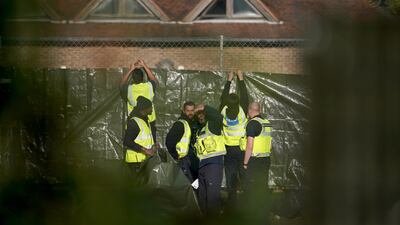
Security staff work to cover the view of people thought to be migrants in the Manston centre. PA -

An aerial view of the facility in Manston. PA -

Seven hundred people were moved to the centre for safety reasons after incendiary devices were thrown at a Border Force migrant centre in Dover on Sunday. Reuters -

A man holds up a baby in the immigration processing centre. Reuters -

A woman at the Manston centre. Reuters -

A tent inside the processing centre. Reuters -

The entrance to the Manston immigration holding facility. AP


“We take the safety and welfare of those in our care extremely seriously and are taking all of the necessary steps following these results.”
Diphtheria vaccinations will be offered to any new arrivals at Manston, the spokeswoman said.
The man, whose name and nationality have not been made public, died in hospital on November 19 after. He is believed to have entered the UK on a small boat seven days earlier.
The National Health Service says it is rare in the UK and can be treated through antibiotics and other medicines.
At one point, up to 4,000 people were being detained at the site, which is designed to hold 1,600, but on Tuesday UK government sources said the site had been emptied.
New arrivals are taken to the site, which is designed to hold people for short periods, while security and identity checks before they are moved to other accommodation.
Some people have been held for far longer periods due to a lack of alternative accommodation.
The Home Office has not said whether it is taking steps to limit the spread of diphtheria elsewhere, with migrants having been moved from Manston to hotels around the country.
Before the man's death, the UK Health Security Agency had identified 39 diphtheria cases in asylum seekers in England in 2022, as of November 10.
The health authority gave a warning that accommodation settings should be considered “high-risk for infectious diseases”.

